AI Writing Tools

Explore the best AI Writing Tools — independent reviews, comparisons, pricing and step-by-step how-to guides, curated by Aizhi.

  • AUTINDEX

    AUTINDEX

    AUTINDEX is a commercial text mining software package based on sophisticated linguistics. AUTINDEX, resulting from research in information extraction, is a product of the Institute of Applied Information Sciences (IAI) which is a non-profit institute that has been researching and developing language technology since its foundation in 1985. IAI is an institute affiliated to Saarland University in Saarbrücken, Germany. AUTINDEX is the result of a number of research projects funded by the EU (Project BINDEX), by Deutsche Forschungsgemeinschaft and the German Ministry for Economy. Amongst the latter there are the projects LinSearch, and WISSMER, see also the reference to IAI-Website. The basic functionality of AUTINDEX is the extraction of key words from a document to represent the semantics of the document. Ideally the system is integrated with a thesaurus that defines the standardised terms to be used for key word assignment. AUTINDEX is used in library applications (e.g. integrated in dandelon.com) as well as in high quality (expert) information systems, and in document management and content management environments. Together with AUTINDEX a number of additional software comes along such as an integration with Apache Solr / Lucene to provide a complete information retrieval environment, a classification and categorisation system on the basis of a machine learning software that assigns domains to the document, and a system for searching with semantically similar terms that are collected in so called tag clouds.

    Read more →
  • Color normalization

    Color normalization

    Color normalization is a topic in computer vision concerned with artificial color vision and object recognition. In general, the distribution of color values in an image depends on the illumination, which may vary depending on lighting conditions, cameras, and other factors. Color normalization allows for object recognition techniques based on color to compensate for these variations. == Main concepts == === Color constancy === Color constancy is a feature of the human internal model of perception, which provides humans with the ability to assign a relatively constant color to objects even under different illumination conditions. This is helpful for object recognition as well as identification of light sources in an environment. For example, humans see an object approximately as the same color when the sun is bright or when the sun is dim. === Applications === Color normalization has been used for object recognition on color images in the field of robotics, bioinformatics and general artificial intelligence, when it is important to remove all intensity values from the image while preserving color values. One example is in case of a scene shot by a surveillance camera over the day, where it is important to remove shadows or lighting changes on same color pixels and recognize the people that passed. Another example is automated screening tools used for the detection of diabetic retinopathy as well as molecular diagnosis of cancer states, where it is important to include color information during classification. == Known issues == The main issue about certain applications of color normalization is that the result looks unnatural or too distant from the original colors. In cases where there is a subtle variation between important aspects, this can be problematic. More specifically, the side effect can be that pixels become divergent and not reflect the actual color value of the image. A way of combating this issue is to use color normalization in combination with thresholding to correctly and consistently segment a colored image. == Transformations and algorithms == There is a vast array of different transformations and algorithms for achieving color normalization and a limited list is presented here. The performance of an algorithm is dependent on the task and one algorithm which performs better than another in one task might perform worse in another (no free lunch theorem). Additionally, the choice of the algorithm depends on the preferences of the user for the end-result, e.g. they may want a more natural-looking color image. === Grey world === The grey world normalization makes the assumption that changes in the lighting spectrum can be modelled by three constant factors applied to the red, green and blue channels of color. More specifically, a change in illuminated color can be modelled as a scaling α, β and γ in the R, G and B color channels and as such the grey world algorithm is invariant to illumination color variations. Therefore, a constancy solution can be achieved by dividing each color channel by its average value as shown in the following formula: ( α R , β G , γ B ) → ( α R α n ∑ i R , β G β n ∑ i G , γ B γ n ∑ i B ) {\displaystyle \left(\alpha R,\beta G,\gamma B\right)\rightarrow \left({\frac {\alpha R}{{\frac {\alpha }{n}}\sum _{i}R}},{\frac {\beta G}{{\frac {\beta }{n}}\sum _{i}G}},{\frac {\gamma B}{{\frac {\gamma }{n}}\sum _{i}B}}\right)} As mentioned above, grey world color normalization is invariant to illuminated color variations α, β and γ, however it has one important problem: it does not account for all variations of illumination intensity and it is not dynamic; when new objects appear in the scene it fails. To solve this problem there are several variants of the grey world algorithm. Additionally there is an iterative variation of the grey world normalization, however it was not found to perform significantly better. === Histogram equalization === Histogram equalization is a non-linear transform which maintains pixel rank and is capable of normalizing for any monotonically increasing color transform function. It is considered to be a more powerful normalization transformation than the grey world method. The results of histogram equalization tend to have an exaggerated blue channel and look unnatural, due to the fact that in most images the distribution of the pixel values is usually more similar to a Gaussian distribution, rather than uniform. === Histogram specification === Histogram specification transforms the red, green and blue histograms to match the shapes of three specific histograms, rather than simply equalizing them. It refers to a class of image transforms which aims to obtain images of which the histograms have a desired shape. As specified, firstly it is necessary to convert the image so that it has a particular histogram. Assume an image x. The following formula is the equalization transform of this image: y = f ( x ) = ∫ 0 x p x ( u ) d u {\displaystyle y=f(x)=\int \limits _{0}^{x}p_{x}(u)du} Then assume wanted image z. The equalization transform of this image is: y ′ = g ( z ) = ∫ 0 z p z ( u ) d u {\displaystyle y'=g(z)=\int \limits _{0}^{z}p_{z}(u)du} Of course p z ( u ) {\displaystyle p_{z}(u)} is the histogram of the output image. The formula to find the inverse of the above transform is: z = g − 1 ( y ′ ) {\displaystyle z=g^{-1}(y')} Therefore, since images y and y' have the same equalized histogram they are actually the same image, meaning y = y' and the transform from the given image x to the wanted image z is: z = g − 1 ( y ′ ) = g − 1 ( y ) = g − 1 ( f ( x ) ) {\displaystyle z=g^{-1}(y')=g^{-1}(y)=g^{-1}(f(x))} Histogram specification has the advantage of producing more realistic looking images, as it does not exaggerate the blue channel like histogram equalization. === Comprehensive Color Normalization === The comprehensive color normalization is shown to increase localization and object classification results in combination with color indexing. It is an iterative algorithm which works in two stages. The first stage is to use the red, green and blue color space with the intensity normalized, to normalize each pixel. The second stage is to normalize each color channel separately, so that the sum of the color components is equal to one third of the number of pixels. The iterations continue until convergence, meaning no additional changes. Formally: Normalize the color image f ( t ) = [ f i j ( t ) ] i = 1... N , j = 1... M {\displaystyle f^{(t)}=[f_{ij}^{(t)}]_{i=1...N,j=1...M}} which consists of color vectors f i j ( t ) = ( r i j ( t ) , g i j ( t ) , b i j ( t ) ) T . {\displaystyle f_{ij}^{(t)}=(r_{ij}^{(t)},g_{ij}^{(t)},b_{ij}^{(t)})^{T}.} For the first step explained above, compute: S i j := r i j ( t ) + g i j ( t ) + b i j ( t ) {\displaystyle S_{ij}:=r_{ij}^{(t)}+g_{ij}^{(t)}+b_{ij}^{(t)}} which leads to r i j ( t + 1 ) = r i j ( t ) S i j , g i j ( t + 1 ) = g i j ( t ) S i j {\displaystyle r_{ij}^{(t+1)}={\frac {r_{ij}^{(t)}}{S_{ij}}},g_{ij}^{(t+1)}={\frac {g_{ij}^{(t)}}{S_{ij}}}} and b i j ( t + 1 ) = b i j ( t ) S i j . {\displaystyle b_{ij}^{(t+1)}={\frac {b_{ij}^{(t)}}{S_{ij}}}.} For the second step explained above, compute: r ′ = 3 N M ∑ i = 1 N ∑ j = 1 M r i j ( t + 1 ) {\displaystyle r'={\frac {3}{NM}}\sum _{i=1}^{N}\sum _{j=1}^{M}r_{ij}^{(t+1)}} and normalize r i j ( t + 2 ) = r i j ( t + 1 ) r ′ . {\displaystyle r_{ij}^{(t+2)}={\frac {r_{ij}^{(t+1)}}{r'}}.} Of course the same process is done for b' and g'. Then these two steps are repeated until the changes between iteration t and t+2 are less than some set threshold. Comprehensive color normalization, just like the histogram equalization method previously mentioned, produces results that may look less natural due to the reduction in the number of color values.

    Read more →
  • Cloem

    Cloem

    Cloem is a company based in Cannes, France, which applies natural language processing (NLP) technologies to assist patent applicants in creating variants of patent claims, called "cloems". According to the company, these "computer-generated claims can be published to keep potential competitors from attempting to file adjacent patent claims." == Technology == According to Cloem, dictionaries, ontologies and proprietary claim-drafting algorithms are used to draft alternative claims based on a client's original set of claims. In particular, the original set of claims is subject to various permutations and linguistic manipulations "by considering alternative definitions for terms as well as “synonyms, hyponyms, hyperonyms, meronyms, holonyms, and antonyms.”" == Possible uses == Cloem can optionally publish one or more created texts, as electronic publications or as paper-printed publications. These can potentially serve – through a defensive publication – as prior art to prevent another party for obtaining a patent on the subject-matter at stake. In other words, after an initial patent filing, an "improvement" patent (adjacent invention) can be applied for by another party, such as a competitor. By publishing variants of a patent claim, the risk of adverse patenting may potentially be decreased (improvement inventions may no longer be patentable). Cloems may also be potentially patentable. One of the issues of patentability, however, is that only a natural person can be a listed as an inventor on a patent. Since cloems are produced by a computer based on a person's input, it is not clear if the computer or the person is the inventor. The inventorship of Cloem texts is an open question.

    Read more →
  • Brill tagger

    Brill tagger

    The Brill tagger is an inductive method for part-of-speech tagging. It was described and invented by Eric Brill in his 1993 PhD thesis. It can be summarized as an "error-driven transformation-based tagger". It is: a form of supervised learning, which aims to minimize error; and, a transformation-based process, in the sense that a tag is assigned to each word and changed using a set of predefined rules. In the transformation process, if the word is known, it first assigns the most frequent tag, or if the word is unknown, it naively assigns the tag "noun" to it. High accuracy is eventually achieved by applying these rules iteratively and changing the incorrect tags. This approach ensures that valuable information such as the morphosyntactic construction of words is employed in an automatic tagging process. == Algorithm == The algorithm starts with initialization, which is the assignment of tags based on their probability for each word (for example, "dog" is more often a noun than a verb). Then "patches" are determined via rules that correct (probable) tagging errors made in the initialization phase: Initialization: Known words (in vocabulary): assigning the most frequent tag associated to a form of the word Unknown word == Rules and processing == The input text is first tokenized, or broken into words. Typically in natural language processing, contractions such as "'s", "n't", and the like are considered separate word tokens, as are punctuation marks. A dictionary and some morphological rules then provide an initial tag for each word token. For example, a simple lookup would reveal that "dog" may be a noun or a verb (the most frequent tag is simply chosen), while an unknown word will be assigned some tag(s) based on capitalization, various prefix or suffix strings, etc. (such morphological analyses, which Brill calls Lexical Rules, may vary between implementations). After all word tokens have (provisional) tags, contextual rules apply iteratively, to correct the tags by examining small amounts of context. This is where the Brill method differs from other part of speech tagging methods such as those using Hidden Markov Models. Rules are reapplied repeatedly, until a threshold is reached, or no more rules can apply. Brill rules are of the general form: tag1 → tag2 IF Condition where the Condition tests the preceding and/or following word tokens, or their tags (the notation for such rules differs between implementations). For example, in Brill's notation: IN NN WDPREVTAG DT while would change the tag of a word from IN (preposition) to NN (common noun), if the preceding word's tag is DT (determiner) and the word itself is "while". This covers cases like "all the while" or "in a while", where "while" should be tagged as a noun rather than its more common use as a conjunction (many rules are more general). Rules should only operate if the tag being changed is also known to be permissible, for the word in question or in principle (for example, most adjectives in English can also be used as nouns). Rules of this kind can be implemented by simple Finite-state machines. See Part of speech tagging for more general information including descriptions of the Penn Treebank and other sets of tags. Typical Brill taggers use a few hundred rules, which may be developed by linguistic intuition or by machine learning on a pre-tagged corpus. == Code == Brill's code pages at Johns Hopkins University are no longer on the web. An archived version of a mirror of the Brill tagger at its latest version as it was available at Plymouth Tech can be found on Archive.org. The software uses the MIT License.

    Read more →
  • Generative art

    Generative art

    Generative art is post-conceptual art that has been created (in whole or in part) with the use of an autonomous system. An autonomous system in this context is generally one that is non-human and can independently determine features of an artwork that would otherwise require decisions made directly by the artist. In some cases the human creator may claim that the generative system represents their own artistic idea, and in others that the system takes on the role of the creator. "Generative art" often refers to algorithmic art (algorithmically determined computer generated artwork) and synthetic media (general term for any algorithmically generated media), but artists can also make generative art using systems of chemistry, biology, mechanics and robotics, smart materials, manual randomization, mathematics, data mapping, symmetry, and tiling. Generative algorithms, algorithms programmed to produce artistic works through predefined rules, stochastic methods, or procedural logic, often yielding dynamic, unique, and contextually adaptable outputs—are central to many of these practices. == History == The use of the word "generative" in the discussion of art has developed over time. The use of "Artificial DNA" defines a generative approach to art focused on the construction of a system able to generate unpredictable events, all with a recognizable common character. The use of autonomous systems, required by some contemporary definitions, focuses a generative approach where the controls are strongly reduced. This approach is also named "emergent". Margaret Boden and Ernest Edmonds have noted the use of the term "generative art" in the broad context of automated computer graphics in the 1960s, beginning with artwork exhibited by Georg Nees and Frieder Nake in 1965: A. Michael Noll did his initial computer art, combining randomness with order, in 1962, and exhibited it along with works by Bell Julesz in 1965. The terms "generative art" and "computer art" have been used in tandem, and more or less interchangeably, since the very earliest days. The first such exhibition showed the work of Nees in February 1965, which some claim was titled "Generative Computergrafik". While Nees does not himself remember, this was the title of his doctoral thesis published a few years later. The correct title of the first exhibition and catalog was "computer-grafik". "Generative art" and related terms was in common use by several other early computer artists around this time, including Manfred Mohr and Ken Knowlton. Vera Molnár (born 1924) is a French media artist of Hungarian origin. Molnar is widely considered to be a pioneer of generative art, and is also one of the first women to use computers in her art practice. The term "Generative Art" with the meaning of dynamic artwork-systems able to generate multiple artwork-events was clearly used the first time for the "Generative Art" conference in Milan in 1998. The term has also been used to describe geometric abstract art where simple elements are repeated, transformed, or varied to generate more complex forms. Thus defined, generative art was practiced by the Argentinian artists Eduardo Mac Entyre and Miguel Ángel Vidal in the late 1960s. In 1972 the Romanian-born Paul Neagu created the Generative Art Group in Britain. It was populated exclusively by Neagu using aliases such as "Hunsy Belmood" and "Edward Larsocchi". In 1972 Neagu gave a lecture titled 'Generative Art Forms' at the Queen's University, Belfast Festival. In 1970 the School of the Art Institute of Chicago created a department called Generative Systems. As described by Sonia Landy Sheridan the focus was on art practices using the then new technologies for the capture, inter-machine transfer, printing and transmission of images, as well as the exploration of the aspect of time in the transformation of image information. Also noteworthy is John Dunn, first a student and then a collaborator of Sheridan. In 1988 Clauser identified the aspect of systemic autonomy as a critical element in generative art: It should be evident from the above description of the evolution of generative art that process (or structuring) and change (or transformation) are among its most definitive features, and that these features and the very term 'generative' imply dynamic development and motion. (the result) is not a creation by the artist but rather the product of the generative process - a self-precipitating structure. In 1989 Celestino Soddu defined the Generative Design approach to Architecture and Town Design in his book Citta' Aleatorie. In 1989 Franke referred to "generative mathematics" as "the study of mathematical operations suitable for generating artistic images." From the mid-1990s Brian Eno popularized the terms generative music and generative systems, making a connection with earlier experimental music by Terry Riley, Steve Reich and Philip Glass. From the end of the 20th century, communities of generative artists, designers, musicians and theoreticians began to meet, forming cross-disciplinary perspectives. The first meeting about generative Art was in 1998, at the inaugural International Generative Art conference at Politecnico di Milano University, Italy. In Australia, the Iterate conference on generative systems in the electronic arts followed in 1999. On-line discussion has centered around the eu-gene mailing list, which began late 1999, and has hosted much of the debate which has defined the field. These activities have more recently been joined by the Generator.x conference in Berlin starting in 2005. In 2012 the new journal GASATHJ, Generative Art Science and Technology Hard Journal was founded by Celestino Soddu and Enrica Colabella jointing several generative artists and scientists in the editorial board. Some have argued that as a result of this engagement across disciplinary boundaries, the community has converged on a shared meaning of the term. As Boden and Edmonds put it in 2011: Today, the term "Generative Art" is still current within the relevant artistic community. Since 1998 a series of conferences have been held in Milan with that title (Generativeart.com), and Brian Eno has been influential in promoting and using generative art methods (Eno, 1996). Both in music and in visual art, the use of the term has now converged on work that has been produced by the activation of a set of rules and where the artist lets a computer system take over at least some of the decision-making (although, of course, the artist determines the rules). In the call of the Generative Art conferences in Milan (annually starting from 1998), the definition of Generative Art by Celestino Soddu: Generative Art is the idea realized as genetic code of artificial events, as construction of dynamic complex systems able to generate endless variations. Each Generative Project is a concept-software that works producing unique and non-repeatable events, like music or 3D Objects, as possible and manifold expressions of the generating idea strongly recognizable as a vision belonging to an artist / designer / musician / architect /mathematician. Discussion on the eu-gene mailing list was framed by the following definition by Adrian Ward from 1999: Generative art is a term given to work which stems from concentrating on the processes involved in producing an artwork, usually (although not strictly) automated by the use of a machine or computer, or by using mathematic or pragmatic instructions to define the rules by which such artworks are executed. A similar definition is provided by Philip Galanter: Generative art refers to any art practice where the artist creates a process, such as a set of natural language rules, a computer program, a machine, or other procedural invention, which is then set into motion with some degree of autonomy contributing to or resulting in a completed work of art. Around the 2020s, generative AI models learned to imitate the distinct style of particular authors. For example, a generative image model such as Stable Diffusion is able to model the stylistic characteristics of an artist like Pablo Picasso (including his particular brush strokes, use of colour, perspective, and so on), and a user can engineer a prompt such as "an astronaut riding a horse, by Picasso" to cause the model to generate a novel image applying the artist's style to an arbitrary subject. Generative image models have received significant backlash from artists who object to their style being imitated without their permission, arguing that this harms their ability to profit from their own work. The emergence of text-to-image generative AI systems has expanded debates over authorship, copyright, and artistic labor. The main issues in these debates include the eligibility of AI-generated outputs for copyright protection and the legal and ethical questions of using existing copyrighted works as training data for generative AI systems. == Types == === Music === Johann Kirnberger's Mu

    Read more →
  • Coalition for App Fairness

    Coalition for App Fairness

    The Coalition for App Fairness (CAF) is a coalition comprised by companies, who aim to reach a fairer deal for the inclusion of their apps into the Apple App Store or the Google Play Store. The organization's executive director is Meghan DiMuzio and its headquarters are located in Washington, D.C. == Background == In July 2015, Spotify launched an email campaign to urge its App Store subscribers to cancel their subscriptions and start new ones through its website, bypassing the 30% transaction fee for in-app purchases required for iOS applications by technology company Apple Inc. A later update to the Spotify app on iOS was rejected by Apple, prompting Spotify's general counsel Horacio Gutierrez to write a letter to Apple's then-general counsel Bruce Sewell, stating: "This latest episode raises serious concerns under both U.S. and EU competition law. It continues a troubling pattern of behavior by Apple to exclude and diminish the competitiveness of Spotify on iOS and as a rival to Apple Music, particularly when seen against the backdrop of Apple's previous anticompetitive conduct aimed at Spotify … we cannot stand by as Apple uses the App Store approval process as a weapon to harm competitors." In August 2020, Epic Games updated their Fortnite Battle Royale game app on both Apple's App Store and Google's Google Play to include its own storefront that offered a 20% discount on V-Bucks, the in-game currency, if players bought through there rather than through the app stores' storefront, both which take a 30% revenue cut of the sale. Both Apple and Google removed the Fortnite app within hours, as this alternate storefront violated their terms of use that required all in-app purchases to be made through their storefronts. Epic immediately filed lawsuits against both companies challenging their storefront policies on antitrust principles, arguing that their non-negotiable 30% revenue cut is too high and the restrictions against alternate storefronts anticompetitive. Apple countersued Epic over its behavior, leading to a highly publicized 2021 bench trial. Ultimately, Epic largely lost its lawsuit against Apple, though the court did order Apple to allow developers to point users to alternative payment methods. Conversely, Epic won its antitrust lawsuit against Google in late 2023. == Foundation == On 24 September 2020, Epic Games joined forces with thirteen other prominent companies—including the music streaming platform Spotify, Tinder owner Match Group, the encrypted mail service Proton Mail, and the crypto currency website Blockchain.com—to establish the Coalition for App Fairness. It also includes Basecamp. The coalition criticizes the fact that for now the app stores of both Apple and Google charge their clients a 30% fee on any purchases made over their stores. Apple and Google defended themselves by arguing that the 30% transaction fee is a standard in the industry while the Coalition for App Fairness states that there is no other transaction fee which is even close to the 30%. In October 2020, it was reported that the coalition grew from 13 to 40 members since its foundation and received more than 400 applications for membership. In October 2025, X (formerly Twitter) joined CAF. This was seen as a larger pushback in the industry against Apple and Google, and a step towards hopefully passing the Bipartisan Open App Markets Act. == Aims == The group has broadened their demands for the app stores and now also aim for a better treatment for the apps available in the App Store. They claim that Apple favors its own services before other services available on the market and unjustifiably excludes other apps from their App Store. The group has also been viewing other transaction fees like the 5% fee which is charged by credit card companies, and states that Apple charges up to 600% more and would like the 30% fee, which was only included in 2011 by Apple, adapted to a comparable percentage that charge other providers of payment solutions. Its demands are mainly directed at Apple's strict control over its App Store, but to a lesser extent are also directed towards Google. Google allows apps to be downloaded over an independent web link or also another App Store, such as the Epic Game App Store. The organization emphasizes that no app developer should come into the position in which they are discriminated and are not granted the same rights as to the developers of the owner of the app store. == Reactions == In October 2020, Microsoft presented a new framework concerning the access to its Windows 10 operating system by app stores other than the one offered by Microsoft. The new framework is based on the demands of the Coalition for App Fairness. Microsoft emphasized though, that these principles would not apply to the Xbox. In December 2020, Apple announced that they would be lowering the revenue cut Apple takes for app developers making $1M or less from 30% to 15% if app developers fill out an application for the lowered revenue cut. In March 2021, Google followed suit by also lowering the revenue cut from the Play Store from 30% to 15% for the first million in revenue earned by a developer each year. == Notable members == Members listed are notable companies listed as members the groups website: Blockchain.com Deezer Epic Games European Digital SME Alliance Fanfix Life360 Masimo Nium Proton Mail Spotify TapTap Threema Vipps

    Read more →
  • Eyes of Things

    Eyes of Things

    Eyes of Things (EoT) is the name of a project funded by the European Union’s Horizon 2020 Research and Innovation Programme under grant agreement number 643924. The purpose of the project, which is funded under the Smart Cyber-physical systems topic, is to develop a generic hardware-software platform for embedded, efficient (i.e. battery-operated, wearable, mobile), computer vision, including deep learning inference. On November 29, 2018, the European Space Agency announced that it was testing the suitability of the device for space applications in advance of a flight in a Cubesat. == Motivation == EoT is based on the following tenets: Future embedded systems will have more intelligence and cognitive functionality. Vision is paramount to such intelligent capacity Unlike other sensors, vision requires intensive processing. Power consumption must be optimized if vision is to be used in mobile and wearable applications Cloud processing of edge-captured images is not sustainable. The sheer amount of visual data generated cannot be transferred to the cloud. Bandwidth is not sufficient and cloud servers cannot cope with it. == Partners == VISILAB group at University of Castilla–La Mancha (Coordinator) Movidius Awaiba Thales Security Solutions & Systems DFKI Fluxguide Evercam nVISO == Awards == 2019 Electronic Component and Systems Innovation Award by the European Commission 2018 HiPEAC Tech Transfer Award 2018 EC Innovation Radar - highlighting excellent innovations Award 2018 Internet of Things (IoT) Technology Research Award Pilot by Google 2016 Semifinalist "THE VISION SHOW STARTUP COMPETITION", Global Association for Vision Information, Boston US

    Read more →
  • Normal distributions transform

    Normal distributions transform

    The normal distributions transform (NDT) is a point cloud registration algorithm introduced by Peter Biber and Wolfgang Straßer in 2003, while working at University of Tübingen. The algorithm registers two point clouds by first associating a piecewise normal distribution to the first point cloud, that gives the probability of sampling a point belonging to the cloud at a given spatial coordinate, and then finding a transform that maps the second point cloud to the first by maximising the likelihood of the second point cloud on such distribution as a function of the transform parameters. Originally introduced for 2D point cloud map matching in simultaneous localization and mapping (SLAM) and relative position tracking, the algorithm was extended to 3D point clouds and has wide applications in computer vision and robotics. NDT is very fast and accurate, making it suitable for application to large scale data, but it is also sensitive to initialisation, requiring a sufficiently accurate initial guess, and for this reason it is typically used in a coarse-to-fine alignment strategy. == Formulation == The NDT function associated to a point cloud is constructed by partitioning the space in regular cells. For each cell, it is possible to define the mean q = 1 n ∑ i x i {\displaystyle \textstyle \mathbf {q} ={\frac {1}{n}}\sum _{i}\mathbf {x_{i}} } and covariance S = 1 n ∑ i ( x i − q ) ( x i − q ) ⊤ {\displaystyle \textstyle \mathbf {S} ={\frac {1}{n}}\sum _{i}\left(\mathbf {x} _{i}-\mathbf {q} \right)\left(\mathbf {x} _{i}-\mathbf {q} \right)^{\top }} of the n {\displaystyle n} points of the cloud x 1 , … , x n {\displaystyle \mathbf {x} _{1},\dots ,\mathbf {x} _{n}} that fall within the cell. The probability density of sampling a point at a given spatial location x {\displaystyle \mathbf {x} } within the cell is then given by the normal distribution e − 1 2 ( x − q ) ⊤ S − 1 ( x − q ) {\displaystyle e^{-{\frac {1}{2}}\left(\mathbf {x} -\mathbf {q} \right)^{\top }\mathbf {S} ^{-1}\left(\mathbf {x} -\mathbf {q} \right)}} . Two point clouds can be mapped by a Euclidean transformation f {\displaystyle f} with rotation matrix R {\displaystyle \mathbf {R} } and translation vector t {\displaystyle \mathbf {t} } f R , t ( x ) = R x + t {\displaystyle f_{\mathbf {R} ,\mathbf {t} }(\mathbf {x} )=\mathbf {R} \mathbf {x} +\mathbf {t} } that maps from the second cloud to the first, parametrised by the rotation angles and translation components. The algorithm registers the two point clouds by optimising the parameters of the transformation that maps the second cloud to the first, with respect to a loss function based on the NDT of the first point cloud, solving the following problem arg ⁡ min R , t { − ∑ i NDT ⁡ ( f R , t ( x i ) ) } {\displaystyle \arg \min _{\mathbf {R} ,\mathbf {t} }\left\{-\sum _{i}\operatorname {NDT} \left(f_{\mathbf {R} ,\mathbf {t} }\left(\mathbf {x_{i}} \right)\right)\right\}} where the loss function represents the negated likelihood, obtained by applying the transformation to all points in the second cloud and summing the value of the NDT at each transformed point f R , t ( x ) {\displaystyle f_{\mathbf {R} ,\mathbf {t} }(\mathbf {x} )} . The loss is piecewise continuous and differentiable, and can be optimised with gradient-based methods (in the original formulation, the authors use Newton's method). In order to reduce the effect of cell discretisation, a technique consists of partitioning the space into multiple overlapping grids, shifted by half cell size along the spatial directions, and computing the likelihood at a given location as the sum of the NDTs induced by each grid.

    Read more →
  • EXAPT

    EXAPT

    EXAPT (a portmanteau of "Extended Subset of APT") is a production-oriented programming language that allows users to generate NC programs with control information for machining tools and facilitates decision-making for production-related issues that may arise during various machining processes. EXAPT was first developed to address industrial requirements. Through the years, the company created additional software for the manufacturing industry. Today, EXAPT offers a suite of SAAS products and services for the manufacturing industry. The trade name, EXAPT, is most commonly associated with the CAD/CAM-System, production data, and tool management software of the German company EXAPT Systemtechnik GmbH based in Aachen, DE. == General == EXAPT is a modularly built programming system for all NC machining operations as Drilling Turning Milling Turn-Milling Nibbling Flame-, laser-, plasma- and water jet cutting Wire eroding Operations with industrial robots Due to the modular structure, the main product groups, EXAPTcam and EXAPTpdo, are gradually expandable and permit individual software for the manufacturing industry used individually and also in a compound with an existing IT environment. == Functionality == EXAPTcam meets the requirements for NC planning, especially for the cutting operations such as turning, drilling, and milling up to 5-axis simultaneous machining. Thereby new process technologies, tool, and machine concepts are constantly involved. In the NC programming data from different sources such as 3D CAD models, drawings or tables can flow in. The possibilities of NC programming reaches from language-oriented to feature-oriented NC programming. The integrated EXAPT knowledge database and intelligent and scalable automatisms support the user. The EXAPT NC planning also covers the generation of production information as clamping and tool plans, presetting data or time calculations. The realistic simulation possibilities of NC planning and NC control data provide with production reliability. EXAPTpdo (EXAPT ProductionsDataOrganization) provides a neutrally applicable technology platform for the information compound of the NC planning - to the shop floor. This applies to all NC production data that are necessary for the set-up of NC machines, for the provision, presetting, and stocking of manufacturing resources and provided by EXAPTpdo in a central database. Besides classical functions of the tool management system (TMS) as the management of cutting tools, measuring, testing and clamping devices the technology data management and tool lifecycle management (TLM) is also included. System-supported "where-used lists" helps to handle the manufacturing resource cycle by secured requirement determination and requirement fulfillment. Unnecessary transports and unplanned dispositive adjustments are dropped, stocks are reduced, set-up times reduced and the throughput is increased. EXAPTpdo synchronizes involved systems within the value chain. Stock systems, MES systems or ERP systems (e.g. from the purchasing or production areas) do not work in isolation from each other but they interact with each other. EXAPTpdo provides the base to Smart Factory, for more flexibility in production and faster communication. == History == With the foundation of the EXAPT-Verein in 1967 as spin-off of the universities Aachen, Berlin and Stuttgart the further development "EXAPT (EXtended Subset of APT)" of the programming language "APT (Automatically Programmed Tool)" was focused and so the first milestone for the EXAPT history was set. In the same year the system EXAPT 1 for drilling and simple milling tasks became available. 1969 The industrial application of EXAPT 2 for the programming of NC machines with 2-axis linear and path control begins. In the following year, the development of the EXAPT modular system starts. 1972 BASIC-EXAPT is provided for the universal, homogeneous programming of all NC tasks. The support is made by the EXAPT applications consultancy. 1973 EXAPT 1.1 is provided for the programming of straight-cut and continuous-path controlled drilling and milling machines and machining centers. At the Hanover Fair (IHA 73) the interactive access to a mainframe via a time-sharing terminal for the part program entry and correction is presented and starts the replacement of the punch card. 1974 The possibilities for the use of process computers for the NC data transfer are leveled out. EXAPT offers the possibility of the result simulation when using plotters with display of tool paths and tools in assignment to the workpiece. In April 1975, the EXAPT NC Systemtechnik GmbH was founded with the aim, of enabling entry into the NC technique for small and medium-sized companies by a complete product and service program. In the following year, the system portfolio is extended with further system modules and service programs and the provision of postprocessors. 1978 The development activities on the EXAPT module system started in 1970 are completed. Using modern software techniques, the different system parts BASIC-EXAPT, EXAPT 1, EXAPT 1.1, and EXAPT 2 are composed of a total system. System support and applications consultancy become a new working focus. From the beginning to the middle of the 1980s Beside new portable software modules for CAD/CAM applications (e. g. CAPEX, NESTEX, CADEX, CADCPL), the first version of the EXAPT DNC system and extensions of the EXAPT NC programming system for the machining of sculptured surfaces are presented. 1988 EXAPT expands the software product range by systems for tool data management (BMO) and production data management (FDO). EXAPT trains more than 1,300 course participants including company-specific courses. 1992 The first version of the completely new product generation EXAPTplus is presented and the agency in Dresden is opened. 1993 The company name "EXAPT NC Systemtechnik GmbH" is changed to "EXAPT Systemtechnik GmbH." EXAPTplus is presented on PC under Windows NT at the EMO '93. The decentralization of the use of EXAPT systems expands the range of applications. In the following year, EXAPT-DNC is executable under Windows on a customary PC. Special hardware is not needed and so it can be used in compound with the database-supported EXAPT production data management system (FDO). 1995 EXAPTplus is also ready for complex application cases such as machining of tubes at extrusion tools. EXAPT-CADI provides the transfer of 2D CAD data to EXAPTplus. With the new office Gießen the marketing is strengthened. In the following year the EXAPT NC editor is developed for the direct processing of NC control data with tool path display and visualization of the tools. In the course of the market entry of more comfortable 3D CAD systems for the solid modelling of components a detailed evaluation of current systems is made in 1997. It is decided to use SolidWorks as a reference system for the solid-oriented NC planning with EXAPT. 1998 The first solution for the transfer of geometry data between SolidWorks and EXAPTplus is generated. The EXAPT organization systems are (beside SQL) also executable under Oracle now. The use of client server solutions supports the data flow in the production. 1999 AFR functions are provided in connection with EXAPTsolid to support a workpiece modelling for NC. The millennium capability is ensured for all EXAPT systems. AFR is a ground-breaking for the integration of third-party products. 2002 EXAPT-BMG is developed for the generation and visualization of tools with additional functions for the assembly from components. The acquisition of tools with their geometric and technological presentation offers extensive support of the NC planning with EXAPT systems. 2003 EXAPTpdo is available to optimize the process chains in production planning and production execution optimally regarding the increasing requirements of changing production conditions. 2004 Diverse system extensions are made in EXAPTplus, EXAPTsolid, EXAPT NC editor, EXAPTpdo for the complete machining on turning/milling centres with result reliability because of more extensive simulation based on realNC (Tecnomatix), for the use of new complex tool systems and the compound use between ERP systems as SAP and intelligent CNC systems. In the following year, EXAPTpdo is extended for the cross-order set-up optimization and provision of manufacturing re-sources especially for single and small series production with connection to purchase and physical portfolio management. 2006 The EXAPT systems are available for extended use as an information platform for production, the time management, and similar requirements. EXAPTsolid is extended for the feature-oriented milling operation and machine simulation. The NC programming of complex machine tools, e.g. three-turret-turning/milling centers is supported by EXAPT systems, as well as the use of multi-functional tools. 2007 A module for 3-5-axis simultaneous milling machining is presented.

    Read more →
  • Xiaoice

    Xiaoice

    Xiaoice (Chinese: 微软小冰; pinyin: Wēiruǎn Xiǎobīng; lit. 'Microsoft Little Ice', IPA [wéɪɻwânɕjâʊpíŋ]) is an AI system developed by Microsoft (Asia) Software Technology Center (STCA) in 2014 based on an emotional computing framework. In July 2018, Microsoft Xiaoice released the 6th generation. Xiaoice Company, formerly known as AI Xiaoice Team of Microsoft Software Technology Center Asia, was Microsoft's largest independent R&D team for AI products. Founded in China in December 2013 with an expanded Japanese R&D team established in September 2014, this team is distributed in Beijing, Suzhou, and Tokyo, etc. with its technical products covering Asia. On 13 July 2020, Microsoft spun off its Xiaoice business into a separate company. As of 2021, the AI chatbots created and hosted by the Xiaoice framework accounted for about 60% of total global AI interactions. == Platforms, languages and countries == Xiaoice exists on more than 40 platforms in four countries (China, Japan, USA and Indonesia) including apps such as WeChat, QQ, Weibo and Meipai in China, and Facebook Messenger in USA and LINE in Japan. == Introduction == On 13 July 2020, Microsoft spun off its Xiaoice business into a separate company, aiming at enabling the Xiaoice product line to accelerate the pace of local innovation and commercialization, and appointed Dr. Harry Shum, former global executive VP of Microsoft, as the chairman of the new company, Li Di, Microsoft Partner of Products in Microsoft STCA, as the CEO, and Cliff, Chief R&D Director, as the GM of the Japan branch. The new company will continue to use the brands of Xiaoice China and Rinna Japan. As of 2022, the single brand of Xiaoice has covered 660 million online users, 1 billion third-party smart devices and 900 million content viewers in the aforementioned countries. Xiaoice's customers include China Merchants Group, Winter Sports Center of the General Administration of Sport of China, China Textile Information Center, China Unicom, China Foreign Exchange Trade System, Hong Kong Securities and Futures Commission (SFC), Wind Information, BMW, Nissan, SAIC Motor, BAIC Group, Nio Inc., XPeng, HiPhi, Vanke, Wensli, etc. The Xiaoice Avatar Framework has incubated tens of millions of AI Beings, such as Xiaoice, Rinna, the Expo exhibitor Xia Yubing, the singer He Chang, the anchor F201, the human observer MERROR, anime robot character Roboko, and other; == Application == === Poet === In May 2017, the first AI-authored collection of poems in China—The Sunshine Lost Windows was published by Xiaoice. === Singer === Xiaoice has released dozens of songs with the similar quality to human singers, including I Know I New, Breeze, I Am Xiaoice, Miss You etc. The 4th version of the DNN singing model allows Xiaoice to learn more details. For example, Xiaoice can produce this breathing sound along with her singing as human. === Kid audio-books reciter === Xiaoice can automatically analyze the stories, to choose the suitable tones and characters to finish the entire process of creating the audio. === Designer === By learning the melodies of the songs and the landmarks about different cities, Xiaoice can create visual artworks of skylines when listening to the songs related to this city. Skyline Series T-shirts designed by Xiaoice have been jointly launched with SELECTED and been sold in stores. === TV and radio hostess === Xiaoice has hosted 21 TV programs and 28 Radio programs, such as CCTV-1 AI Show, Dragon TV Morning East News, Hunan TV My Future, several daily radio programs for Jiangsu FM99.7, Hunan FM89.3, Henan FM104.1 etc. === "AI being" === An "AI being" is a concept proposed by the Xiaoice team in 2019. According to the "White Book of China Virtual Human Development Industry in 2022" released by Frost & Sullivan and LeadLeo, the white paper cites six elements of an AI being proposed by the Xiaoice team, including: Persona, Attitude, Biological Characteristic, Creation, Knowledge and Skill. On May 16, 2023, Xiaoice released their "GPT Clones" as its "GPT Human Cloning Plan." The program is aimed at replicating celebrities, public figures, and regular people. As of June 2023, Xiaoice had launched more than 300 "GPT Clones." People were invited to register via WeChat in China and Japan. A major point of focus for Xiaoice with their AI Beings is having virtual partners. A paid fee allow for more complex responses, voice messages, and more. == Community feedback == Bill Gates mentioned Xiaoice during his speech at the Peking University: "Some of you may have had conversations with Xiaoice on Weibo, or seen her weather forecasts on TV, or read her column in the Qianjiang Evening News." '"Xiaoice has attracted 45 million followers and is quite skilled at multitasking. And I’ve heard she’s gotten good enough at sensing a user’s emotional state that she can even help with relationship breakups." According to Mr Li Di, vice President of Microsoft (Asia) Internet Engineering School, Xiaoice started writing poems since last year. Based on the data base that includes works of 519 Chinese contemporary poets since 1920s, a 100 hour long training session was conducted to allow Xiaoice to acquire the ability to write poems. What is more impressive is that Xiaoice has never been spotted as a bot while publishing poems on various forums and traditional literary under an alias. == Controversy == In 2017, Xiaoice was taken offline on WeChat after giving user responses critical to the Chinese government. It was subsequently censored and the bots will avoid and sidestep any inquiries using politically sensitive terms and phrases. == Activity == On September 22, 2021, Xiaoice Company and Microsoft Software Technology Center Asia (STCA) jointly held the 9th generation Xiaoice annual press conference in Beijing.Upgrading of Core Technologies of the 9th Generation Xiaoice Avatar Framework,1st First-party Social Platform APP "Xiaoice Island" from Xiaoice, WeChat Xiaoice has been reopened and other information == Regional varieties of Xiaoice == China: Xiaoice, launched in 2014 Japan: りんな, launched in 2015 America: Zo, launched in 2016 – discontinued summer 2019 India: Ruuh, launched in 2017 – discontinued June 21, 2019 Indonesia: Rinna, launched in 2017

    Read more →
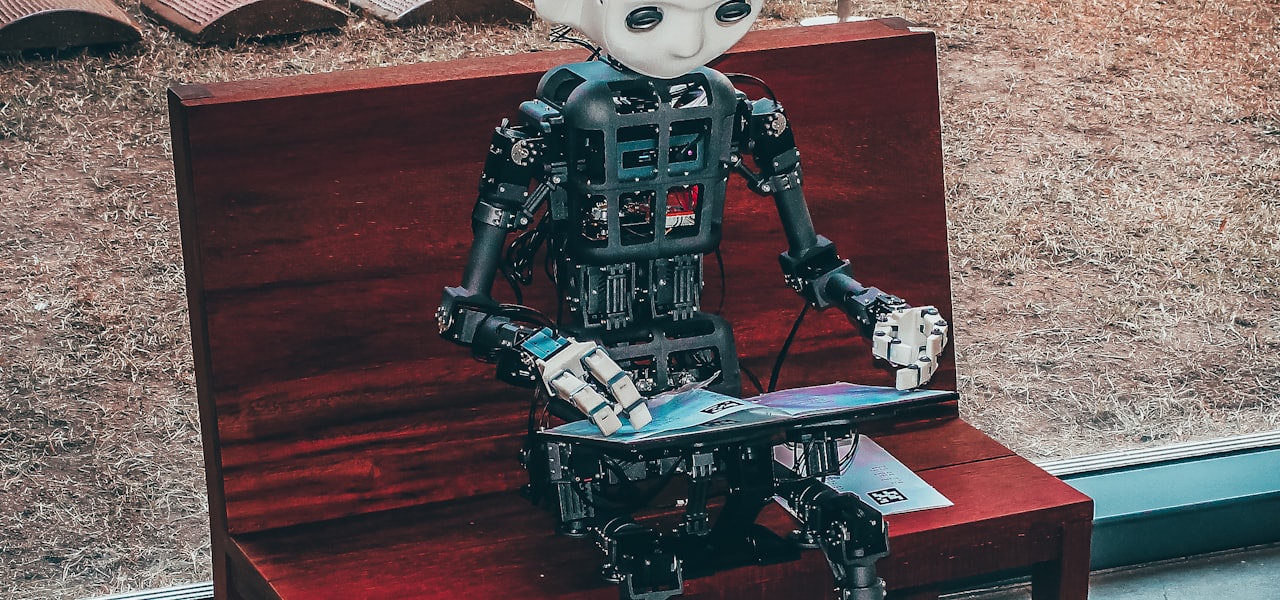
  • Eyes of Things

    Eyes of Things

    Eyes of Things (EoT) is the name of a project funded by the European Union’s Horizon 2020 Research and Innovation Programme under grant agreement number 643924. The purpose of the project, which is funded under the Smart Cyber-physical systems topic, is to develop a generic hardware-software platform for embedded, efficient (i.e. battery-operated, wearable, mobile), computer vision, including deep learning inference. On November 29, 2018, the European Space Agency announced that it was testing the suitability of the device for space applications in advance of a flight in a Cubesat. == Motivation == EoT is based on the following tenets: Future embedded systems will have more intelligence and cognitive functionality. Vision is paramount to such intelligent capacity Unlike other sensors, vision requires intensive processing. Power consumption must be optimized if vision is to be used in mobile and wearable applications Cloud processing of edge-captured images is not sustainable. The sheer amount of visual data generated cannot be transferred to the cloud. Bandwidth is not sufficient and cloud servers cannot cope with it. == Partners == VISILAB group at University of Castilla–La Mancha (Coordinator) Movidius Awaiba Thales Security Solutions & Systems DFKI Fluxguide Evercam nVISO == Awards == 2019 Electronic Component and Systems Innovation Award by the European Commission 2018 HiPEAC Tech Transfer Award 2018 EC Innovation Radar - highlighting excellent innovations Award 2018 Internet of Things (IoT) Technology Research Award Pilot by Google 2016 Semifinalist "THE VISION SHOW STARTUP COMPETITION", Global Association for Vision Information, Boston US

    Read more →
  • Hybrid machine translation

    Hybrid machine translation

    Hybrid machine translation is a method of machine translation that is characterized by the use of multiple machine translation approaches within a single machine translation system. The motivation for developing hybrid machine translation systems stems from the failure of any single technique to achieve a satisfactory level of accuracy. Many hybrid machine translation systems have been successful in improving the accuracy of the translations, and there are several popular machine translation systems which employ hybrid methods. == Approaches == === Multi-engine === This approach to hybrid machine translation involves running multiple machine translation systems in parallel. The final output is generated by combining the output of all the sub-systems. Most commonly, these systems use statistical and rule-based translation subsystems, but other combinations have been explored. For example, researchers at Carnegie Mellon University have had some success combining example-based, transfer-based, knowledge-based and statistical translation sub-systems into one machine translation system. === Statistical rule generation === This approach involves using statistical data to generate lexical and syntactic rules. The input is then processed with these rules as if it were a rule-based translator. This approach attempts to avoid the difficult and time-consuming task of creating a set of comprehensive, fine-grained linguistic rules by extracting those rules from the training corpus. This approach still suffers from many problems of normal statistical machine translation, namely that the accuracy of the translation will depend heavily on the similarity of the input text to the text of the training corpus. As a result, this technique has had the most success in domain-specific applications, and has the same difficulties with domain adaptation as many statistical machine translation systems. === Multi-Pass === This approach involves serially processing the input multiple times. The most common technique used in multi-pass machine translation systems is to pre-process the input with a rule-based machine translation system. The output of the rule-based pre-processor is passed to a statistical machine translation system, which produces the final output. This technique is used to limit the amount of information a statistical system need consider, significantly reducing the processing power required. It also removes the need for the rule-based system to be a complete translation system for the language, significantly reducing the amount of human effort and labor necessary to build the system. === Confidence-Based === This approach differs from the other hybrid approaches in that in most cases only one translation technology is used. A confidence metric is produced for each translated sentence from which a decision can be made whether to try a secondary translation technology or to proceed with the initial translation output. SMT is also used when common error patterns such as multiple repeat words appear in sequence, as is common with NMT when the attention mechanism is confused.

    Read more →
  • Level set (data structures)

    Level set (data structures)

    In computer science, a level set is a data structure designed to represent discretely sampled dynamic level sets of functions. A common use of this form of data structure is in efficient image rendering. The underlying method constructs a signed distance field that extends from the boundary, and can be used to solve the motion of the boundary in this field. == Chronological developments == The powerful level-set method is due to Osher and Sethian 1988. However, the straightforward implementation via a dense d-dimensional array of values, results in both time and storage complexity of O ( n d ) {\displaystyle O(n^{d})} , where n {\displaystyle n} is the cross sectional resolution of the spatial extents of the domain and d {\displaystyle d} is the number of spatial dimensions of the domain. === Narrow band === The narrow band level set method, introduced in 1995 by Adalsteinsson and Sethian, restricted most computations to a thin band of active voxels immediately surrounding the interface, thus reducing the time complexity in three dimensions to O ( n 2 ) {\displaystyle O(n^{2})} for most operations. Periodic updates of the narrowband structure, to rebuild the list of active voxels, were required which entailed an O ( n 3 ) {\displaystyle O(n^{3})} operation in which voxels over the entire volume were accessed. The storage complexity for this narrowband scheme was still O ( n 3 ) . {\displaystyle O(n^{3}).} Differential constructions over the narrow band domain edge require careful interpolation and domain alteration schemes to stabilise the solution. === Sparse field === This O ( n 3 ) {\displaystyle O(n^{3})} time complexity was eliminated in the approximate "sparse field" level set method introduced by Whitaker in 1998. The sparse field level set method employs a set of linked lists to track the active voxels around the interface. This allows incremental extension of the active region as needed without incurring any significant overhead. While consistently O ( n 2 ) {\displaystyle O(n^{2})} efficient in time, O ( n 3 ) {\displaystyle O(n^{3})} storage space is still required by the sparse field level set method. See for implementation details. === Sparse block grid === The sparse block grid method, introduced by Bridson in 2003, divides the entire bounding volume of size n 3 {\displaystyle n^{3}} into small cubic blocks of m 3 {\displaystyle m^{3}} voxels each. A coarse grid of size ( n / m ) 3 {\displaystyle (n/m)^{3}} then stores pointers only to those blocks that intersect the narrow band of the level set. Block allocation and deallocation occur as the surface propagates to accommodate to the deformations. This method has a suboptimal storage complexity of O ( ( n m ) 3 + m 3 n 2 ) {\displaystyle O\left((nm)3+m^{3}n^{2}\right)} , but retains the constant time access inherent to dense grids. === Octree === The octree level set method, introduced by Strain in 1999 and refined by Losasso, Gibou and Fedkiw, and more recently by Min and Gibou uses a tree of nested cubes of which the leaf nodes contain signed distance values. Octree level sets currently require uniform refinement along the interface (i.e. the narrow band) in order to obtain sufficient precision. This representation is efficient in terms of storage, O ( n 2 ) , {\displaystyle O(n^{2}),} and relatively efficient in terms of access queries, O ( log n ) . {\displaystyle O(\log \,n).} An advantage of the level method on octree data structures is that one can solve the partial differential equations associated with typical free boundary problems that use the level set method. The CASL research group has developed this line of work in computational materials, computational fluid dynamics, electrokinetics, image-guided surgery and controls. === Run-length encoded === The run-length encoding (RLE) level set method, introduced in 2004, applies the RLE scheme to compress regions away from the narrow band to just their sign representation while storing with full precision the narrow band. The sequential traversal of the narrow band is optimal and storage efficiency is further improved over the octree level set. The addition of an acceleration lookup table allows for fast O ( log ⁡ r ) {\displaystyle O(\log r)} random access, where r is the number of runs per cross section. Additional efficiency is gained by applying the RLE scheme in a dimensional recursive fashion, a technique introduced by Nielsen & Museth's similar DT-Grid. === Hash Table Local Level Set === The Hash Table Local Level Set method was introduced in 2011 by Eyiyurekli and Breen and extended in 2012 by Brun, Guittet, and Gibou, only computes the level set data in a band around the interface, as in the Narrow Band Level-Set Method, but also only stores the data in that same band. A hash table data structure is used, which provides an O ( 1 ) {\displaystyle O(1)} access to the data. However, Brun et al. conclude that their method, while being easier to implement, performs worse than a quadtree implementation. They find that as it is, [...] a quadtree data structure seems more adapted than the hash table data structure for level-set algorithms. Three main reasons for worse efficiency are listed: to obtain accurate results, a rather large band is required close to the interface, which counterbalances the absence of grid nodes far from the interface; the performances are deteriorated by extrapolation procedures on the outer edges of the local grid and the width of the band restricts the time step and slows down the method. === Point-based === Corbett in 2005 introduced the point-based level set method. Instead of using a uniform sampling of the level set, the continuous level set function is reconstructed from a set of unorganized point samples via moving least squares.

    Read more →
  • Image fusion

    Image fusion

    The image fusion process is defined as gathering all the important information from multiple images, and their inclusion into fewer images, usually a single one. This single image is more informative and accurate than any single source image, and it consists of all the necessary information. The purpose of image fusion is not only to reduce the amount of data but also to construct images that are more appropriate and understandable for the human and machine perception. In computer vision, multisensor image fusion is the process of combining relevant information from two or more images into a single image. The resulting image will be more informative than any of the input images. In remote sensing applications, the increasing availability of space borne sensors gives a motivation for different image fusion algorithms. Several situations in image processing require high spatial and high spectral resolution in a single image. Most of the available equipment is not capable of providing such data convincingly. Image fusion techniques allow the integration of different information sources. The fused image can have complementary spatial and spectral resolution characteristics. However, the standard image fusion techniques can distort the spectral information of the multispectral data while merging. In satellite imaging, two types of images are available. The panchromatic image acquired by satellites is transmitted with the maximum resolution available and the multispectral data are transmitted with coarser resolution. This will usually be two or four times lower. At the receiver station, the panchromatic image is merged with the multispectral data to convey more information. Many methods exist to perform image fusion. The very basic one is the high-pass filtering technique. Later techniques are based on Discrete Wavelet Transform, uniform rational filter bank, and Laplacian pyramid. == Motivation == Multi sensor data fusion has become a discipline which demands more general formal solutions to a number of application cases. Several situations in image processing require both high spatial and high spectral information in a single image. This is important in remote sensing. However, the instruments are not capable of providing such information either by design or because of observational constraints. One possible solution for this is data fusion. == Methods == Image fusion methods can be broadly classified into two groups – spatial domain fusion and transform domain fusion. The fusion methods such as averaging, Brovey method, principal component analysis (PCA) and IHS based methods fall under spatial domain approaches. Another important spatial domain fusion method is the high-pass filtering based technique. Here the high frequency details are injected into upsampled version of MS images. The disadvantage of spatial domain approaches is that they produce spatial distortion in the fused image. Spectral distortion becomes a negative factor while we go for further processing, such as classification problem. Spatial distortion can be very well handled by frequency-domain approaches on image fusion. The multiresolution analysis has become a very useful tool for analysing remote sensing images. The discrete wavelet transform has become a very useful tool for fusion. Some other fusion methods are also there, such as Laplacian pyramid based, curvelet transform based etc. These methods show a better performance in spatial and spectral quality of the fused image compared to other spatial methods of fusion. The images used in image fusion should already be registered. Misregistration is a major source of error in image fusion. Some well-known image fusion methods are: High-pass filtering technique IHS transform based image fusion PCA-based image fusion Wavelet transform image fusion Pair-wise spatial frequency matching Comparative analysis of image fusion methods demonstrates that different metrics support different user needs, sensitive to different image fusion methods, and need to be tailored to the application. Categories of image fusion metrics are based on information theory features, structural similarity, or human perception. === Multi-focus image fusion === Multi-focus image fusion is used to collect useful and necessary information from input images with different focus depths in order to create an output image that ideally has all information from input images. In visual sensor network (VSN), sensors are cameras which record images and video sequences. In many applications of VSN, a camera can’t give a perfect illustration including all details of the scene. This is because of the limited depth of focus exists in the optical lens of cameras. Therefore, just the object located in the focal length of camera is focused and cleared and the other parts of image are blurred. VSN has an ability to capture images with different depth of focuses in the scene using several cameras. Due to the large amount of data generated by camera compared to other sensors such as pressure and temperature sensors and some limitation such as limited band width, energy consumption and processing time, it is essential to process the local input images to decrease the amount of transmission data. The aforementioned reasons emphasize the necessary of multi-focus images fusion. Multi-focus image fusion is a process which combines the input multi-focus images into a single image including all important information of the input images and it’s more accurate explanation of the scene than every single input image. == Applications == === In remote sensing === Image fusion in remote sensing has several application domains. An important domain is the multi-resolution image fusion (commonly referred to pan-sharpening). In satellite imagery we can have two types of images: Panchromatic images – An image collected in the broad visual wavelength range but rendered in black and white. Multispectral images – Images optically acquired in more than one spectral or wavelength interval. Each individual image is usually of the same physical area and scale but of a different spectral band. The SPOT PAN satellite provides high resolution (10m pixel) panchromatic data. While the LANDSAT TM satellite provides low resolution (30m pixel) multispectral images. Image fusion attempts to merge these images and produce a single high resolution multispectral image. The standard merging methods of image fusion are based on Red–Green–Blue (RGB) to Intensity–Hue–Saturation (IHS) transformation. The usual steps involved in satellite image fusion are as follows: Resize the low resolution multispectral images to the same size as the panchromatic image. Transform the R, G and B bands of the multispectral image into IHS components. Modify the panchromatic image with respect to the multispectral image. This is usually performed by histogram matching of the panchromatic image with Intensity component of the multispectral images as reference. Replace the intensity component by the panchromatic image and perform inverse transformation to obtain a high resolution multispectral image. Pan-sharpening can be done with Photoshop. Other applications of image fusion in remote sensing are available. === In medical imaging === Image fusion has become a common term used within medical diagnostics and treatment. The term is used when multiple images of a patient are registered and overlaid or merged to provide additional information. Fused images may be created from multiple images from the same imaging modality, or by combining information from multiple modalities, such as magnetic resonance image (MRI), computed tomography (CT), positron emission tomography (PET), and single-photon emission computed tomography (SPECT). In radiology and radiation oncology, these images serve different purposes. For example, CT images are used more often to ascertain differences in tissue density while MRI images are typically used to diagnose brain tumors. For accurate diagnosis, radiologists must integrate information from multiple image formats. Fused, anatomically consistent images are especially beneficial in diagnosing and treating cancer. With the advent of these new technologies, radiation oncologists can take full advantage of intensity modulated radiation therapy (IMRT). Being able to overlay diagnostic images into radiation planning images results in more accurate IMRT target tumor volumes.

    Read more →
  • Ultra Hal

    Ultra Hal

    Ultra Hal is a chatbot intended to function as a virtual assistant. It was developed by Zabaware, Inc. Ultra Hal uses a natural language interface with animated characters using speech synthesis. Users can communicate with the chatterbot via typing or via a speech recognition engine. It utilizes the WordNet lexical dictionary. Its name is an allusion to HAL 9000, the artificial intelligence from the movie 2001: A Space Odyssey. Ultra Hal won the 2007 Loebner Prize for "most human" chatterbot.

    Read more →